





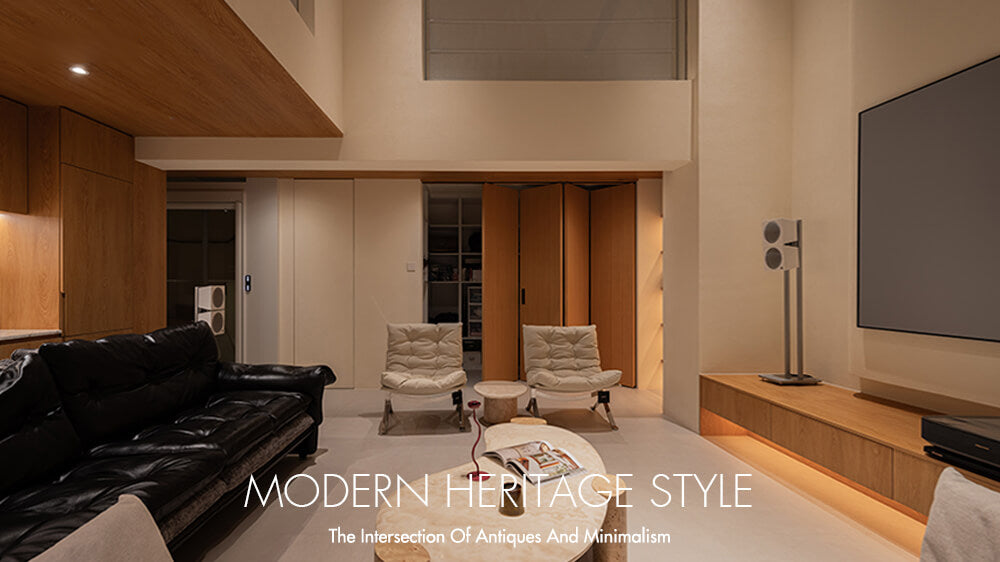
In the ever-evolving landscape of contemporary design, a profound cultural shift has solidified. Homeowners are growing weary of the clinical, single-note "showroom look" that dominated the early minimalist era. Instead, an anti-trend movement has taken root at the absolute apex of interior curation: Modern Heritage.

We define Modern Heritage not as a sentimental hoarding of antiques, but as the art of thoughtful layering. It is the deliberate, calculated coexistence of the past and the present. Crucially, its success hinges on visual friction the captivating tension between time-worn, organic architectural envelopes and the sharp, uncompromising lines of contemporary designer furniture.
Without this contemporary friction, a wood-heavy or historic space risks looking stagnant and heavy. Here, we take you inside three real-world designer residences to demonstrate how grado's sculptural furniture acts as the ultimate aesthetic clarifier, bridging design eras to create a storied, livable masterpiece.
CASE 1: Multi-Generational Sanctuary
Balancing Eclectic Textures and Layered Living for Three Generations

The Design Challenge
Designing a four-story villa for a three-generation family is one of the ultimate tests in modern interior design. How do you honor the elders' preference for grounded, warm wood tones while satisfying the younger generations desire for expressive, contemporary aesthetic all without creating a jarring style split?
The designer of this estate bypassed the trap of compromise through the language of New Eclecticism. By establishing a unified warm color baseline, the space effortlessly juxtaposes rich wood panels, raw marble textures, and bold lacquer work.
The Role of Furniture
In a space enveloped by expansive timber ceilings and rich heritage tones, standard mass-market furniture would either look dated or feel visually suffocating. The savior of this central conversational area is the enclosed layout powered by dual-natured furniture.
The Sandwich Sofa anchors the space, mirroring the home's philosophy of fluid adaptation. Featuring reversible leather and fabric upholstery, it caters to different family preferences and changing seasons offering cozy, tactile fabric for crisp winters and crisp, breathable leather for the height of summer.

Flanking the sofa are two armless, low-profile white leather Omelette Lounge Chairs. With their sleek, architectural lines and gleaming stainless steel bases, these chairs introduce a vital dose of "Contemporary Edge." They ground the soaring height of the lofted living room, creating crucial breathing space for the eye. The Omelette Lounge Chair bridges the gap, offering the ergonomic safety and embrace desired by the elders, alongside the sculptural, retro-futuristic styling demanded by the younger generation.

CASE 2: Switches a Couch for Two Chairs
How Low-Profile Lounging Can Reclaim Urban Spaces

The Design Challenge
For urban mid-career professionals, a home must be highly functional yet rich in character. This project completely challenges the traditional American layout by championing the ditch the sofa movement. The designer stripped away the redundant, heavy drywall ceilings and banished the typical sofa and TV wall setup to maximize vertical clearance and save on unnecessary construction.
Instead, the space is reimagined as a warm, Mid-Century Retro studio focused on intellectual slow-living. A full-wall oak bookcase acts as the visual backbone, paired with a classic fireplace mantel to cultivate a deeply grounding, literary ambiance.
The Role of Furniture
Without a massive sectional anchoring the room, the task of defining the living zone fell entirely upon flexible, high-character accent seating. The designer curated a lounge circle using the Omelette Lounge Chair with its Ottoman, paired with the Greene Recliner.

Both pieces serve a dual identity: a sleek accent chair for focused reading by day, and a deep-reclining chaise for cinematic projection mapping by night. Because these pieces boast a refined, lightweight footprint, they can be easily moved aside, instantly transforming the center rug into a spacious, open play zone for children.

The rich leather texture of the grado loungers deepens the room's mid-century warmth, proving that you don't need a sprawling floor plan to achieve a high-end, layered interior you just need furniture that moves with the rhythm of your life.
CASE 3: Cream Walnut Tonal Home
Knocking Down Walls to Create a Curated, Fluid Floor Plan

The Design Challenge
When the owners of this property decided to knock down an obstructive storage room, they unlocked a spectacular, continuous horizontal layout. To maximize this newfound flow, the designer washed the walls in a soft, luminous oatmeal cream, avoiding stark chalk-whites, and layered the perimeter with deep, dark walnut cabinetry. Vertical plaster moldings line the ceiling edges, pulling the entire architectural envelope into a singular, cohesive narrative.
The Role of Furniture
An expansive, open-concept floor plan requires furniture with soft geometries to keep the transit paths fluid and the visual landscape poetic.

In the living lounge, the fluid Grin Sofa acts as a gentle boundary, its curved silhouette softening the structural linear columns of the room. Nestled beside it, the Fika Lounge Chair introduces a masterful nod to Mid-Century Modern heritage through its finely crafted wooden armrests and tailored frame, striking a dialogue with the built-in walnut cabinetry across the room.

For the ultimate pop of personality, the designer introduced the Mermaid Lounge Chair in a deep, vintage mahogany hue, grounded by a bold, black-and-white striped rug. Illumined by the diffuse, soft glow of a Japanese paper pendant, the furniture ensemble shifts the room away from a sterile template into a highly curated, gallery-like experience.
From the travertine dining table to the French-retro master suite upstairs, materials cycle seamlessly—walnut, raw stone, and soft upholstery return in an elegant loop, completing a flawless aesthetic closure.
How to Recreate Modern Heritage
If you are looking to infuse your own home with this timeless, anti-trend energy, follow these three non-negotiable rules of composition demonstrated across these projects:
15% Metallic & Leather: Keep 85% of your space grounded in organic elements—warm wood, matte plaster, and woven linen. Then, introduce exactly 15% of high-contrast material. A polished stainless steel base or a premium leather grain (like that of the Omelette Lounge Chair) provides the necessary friction to elevate a room from "rustic cozy" to "high-end luxury."
Commit to Low-Profile Horizons: Discard towering, blocky sectionals that truncate your sightlines. Choose low-set seating with sculptural silhouettes to create a sense of infinite vertical space and essential breathing room.
Build a Color and Material Loop: Never use a material only once. If you introduce a dark walnut wood grain in your kitchen cabinets, echo it in the armrest of an accent chair in the living room. If you feature travertine on your dining table, bring a touch of it to your bedroom nightstand. This repetition is the secret behind a home that feels naturally collected over time, rather than hurriedly decorated in a weekend.
Design is never about replicating a viral internet template. It is about deeply understanding how you live, capturing the warmth of your daily rituals, and refusing to compromise on your personal aesthetic heritage.